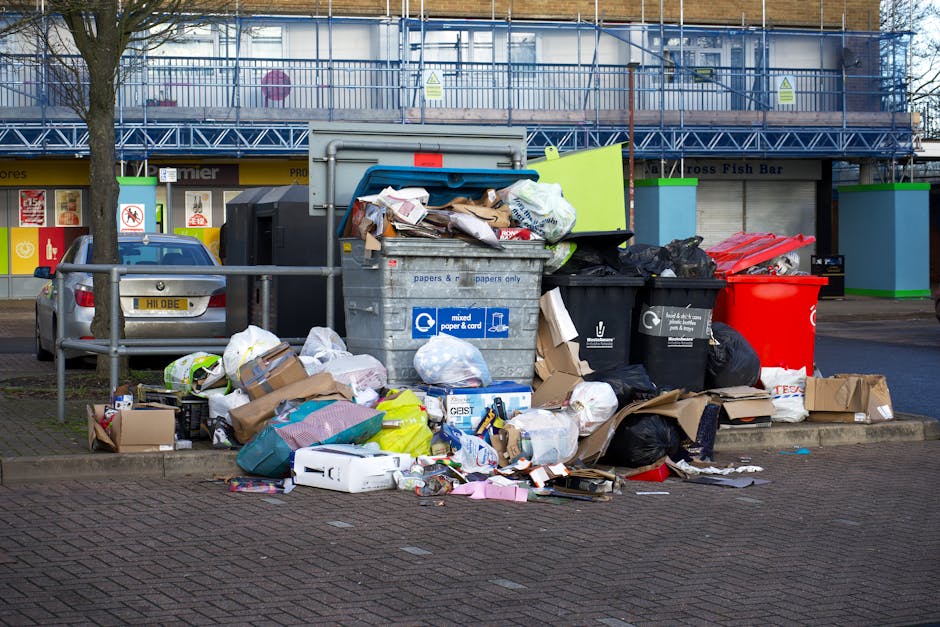
Who Handles Bulky Waste in Chadwell Heath?
Posted on 23/05/2026
If you've got an old sofa sitting in the hallway, a broken wardrobe leaning in the spare room, or a mattress that somehow became heavier than it should be, you're probably asking the same thing: who handles bulky waste in Chadwell Heath? The short answer is that bulky waste can be handled by a few different routes, depending on how much you have, what the items are, and how quickly you need them gone. That might mean a local bulky waste collection service, a licensed waste carrier, or a household disposal route that fits the job.
Truth be told, bulky waste is one of those jobs that seems simple until you're standing in a front room with a smashed cabinet and nowhere to put it. This guide breaks the process down clearly, so you can make the right call without guesswork. You'll find how bulky waste handling works in practice, when each option makes sense, what to watch out for, and the easiest next step if you want the clutter gone without the stress.
Why bulky waste handling in Chadwell Heath matters
Bulky waste isn't just "big rubbish." It's the awkward stuff that fills space, gets in the way, and often can't be handled through normal household bins. Think beds, wardrobes, broken appliances, tables, exercise equipment, carpet offcuts, and the bits of furniture people keep meaning to deal with later. In a busy home, that pile can grow quietly. One day it's a single chair in the corner; the next it's half the garage, and the car hasn't seen daylight for weeks.
In Chadwell Heath, as in many London areas, people want a solution that is quick, lawful, and not a pain to arrange. That's really what this topic is about. Who handles bulky waste here? Usually, it comes down to a choice between a local council collection, a private bulky waste removal service, or a waste clearance company that can take mixed loads. Each route has strengths, and the right one depends on your item type, timing, access, and how much effort you want to spend.
It matters because bulky waste left too long can become a safety issue, a nuisance, and an eyesore. It can block hallways, attract damp or pests if stored badly, and make a property feel cluttered and harder to live in. For landlords, letting agents, and anyone preparing a home for sale or new tenants, the issue is even more practical. Empty space matters. Clean space matters more than people admit.
Key takeaway: the best bulky waste solution is not always the cheapest on paper. It's the one that fits the items, the access, the urgency, and the level of service you actually need.
How bulky waste collection and removal works
At a basic level, bulky waste handling works like this: you identify the items, decide whether they can be reused, recycled, or disposed of, then choose a collection route. A service provider or collection team may take the items from the front of your property, from inside the property, or from a nominated pickup point, depending on the service you book. Simple enough. In practice, a few details matter quite a bit.
Most services will ask what you need removed. A sofa is different from a fridge. A mattress is different from rubble. A mixed load of furniture, packaging, and a broken washing machine is different again. The type of waste affects how it is handled, whether special care is needed, and whether the item can be recycled or must be processed separately.
If you're booking a private clearance, you'll usually describe the items, share photos if requested, and get a quote based on volume, weight, labour, and access. A tight stairwell, no lift, or limited parking can change the practical side of the job. That part catches people out. The collection team may be able to do the work either way, but the process is smoother when they know what they're walking into.
For general waste and house clearance needs, many people also look at related services like house clearance support or a broader waste collection service if the job includes more than just one or two bulky items. If the waste is mixed and needs sorting, a service with wider removal capability can save a second booking later. Nobody really wants to do this twice.
Sometimes the simplest answer is a one-off pickup. Other times, especially after a move, renovation, tenancy change, or garden overhaul, a fuller rubbish removal visit makes more sense. The right service depends on the shape of the mess, not just the mess itself.
Key benefits and practical advantages
Using a proper bulky waste handler instead of trying to improvise has some very real advantages. And yes, there's a difference between "I can probably drag this out myself" and "this needs proper handling."
- Less strain and risk: heavy furniture and appliances can be awkward, sharp, or simply too much for one person to move safely.
- Faster clearance: what sits around for weeks can often be removed in a single visit.
- Better sorting: reusable items, recyclable materials, and true waste can be separated properly.
- Cleaner property presentation: especially useful before a move, tenancy check-out, sale, or refurbishment.
- Less hassle with transport: you don't need to hire a van, borrow a mate's car, or figure out where to take a sofa at 7am on a Saturday.
- More suitable for awkward access: some services are set up to move items from basements, upper floors, or tight streets.
There is also a quieter benefit people sometimes overlook: peace of mind. When bulky waste is handled correctly, you're not left wondering whether you've disposed of something the wrong way. In a place like London, where waste rules and access can be fiddly, that peace is worth a lot.
If you're also dealing with post-renovation debris or mixed skip-style waste, a linked service such as builders waste removal may be the better fit. That's especially true if the job includes boards, fittings, packaging, or other renovation leftovers that don't belong in a standard bulky item pickup.
Who this is for and when it makes sense
Bulky waste handling is useful for a lot more people than you might expect. It isn't just for households clearing out a garage once a year. In Chadwell Heath, it often makes sense for:
- homeowners replacing old furniture or appliances
- tenants preparing for a move-out inspection
- landlords clearing abandoned items between tenancies
- letting agents managing quick turnaround properties
- families downsizing after years of accumulated furniture
- people dealing with a bereavement or a home full of mixed belongings
- small businesses removing shop fittings, desks, or stockroom clutter
It also makes sense when the job is too awkward for a standard council bin system. Large wardrobes don't fold neatly. Fridges do not magically shrink. And a soaked mattress after a leak? That's not a "leave it until next bin day" kind of problem.
To be fair, the service you need depends on what you're trying to solve. If it's one mattress and a broken side table, you may need a small collection only. If you've got a whole flat to clear after a move, then a broader clearance is usually better value. The wrong service can work, but it can also be a bit like taking a suitcase to move a wardrobe. Technically possible. Not ideal.
For larger property clear-outs or more structured removals, some customers also combine bulky waste with office clearance or other specialist clearance services when they are dealing with desks, shelving, office chairs, and mixed contents. That kind of planning keeps the job tidy from the start.
Step-by-step guidance
If you want to handle bulky waste in Chadwell Heath without unnecessary back-and-forth, here's a practical way to approach it.
- List the items clearly. Write down exactly what needs removing. Include furniture, appliances, and any mixed waste.
- Separate what can be kept, donated, or reused. A quick sort before booking can reduce the load. Sometimes that old bookshelf is still useful, even if it looks a bit tired.
- Check access. Note stairs, parking limits, narrow hallways, or rear-garden access. This helps avoid surprises.
- Decide how urgent it is. Same-day needs are different from a flexible job next week.
- Choose the right route. Council collection, private bulky waste service, or full clearance, depending on the load.
- Ask what is included. Confirm labour, loading, disposal, and any extra charges before you book.
- Prepare the items. Move them somewhere safe and accessible if required, unless the service collects from inside.
- Keep proof if needed. For landlords or businesses, keep records of what was removed and when. Simple, but useful.
One sensible habit: take a few photos before removal. It takes thirty seconds and helps with quoting, planning, and later reference. A slightly boring tip, yes, but the kind that saves you from awkward misunderstandings.
If your situation involves furniture plus a lot of general clutter, it can help to look at a tailored flat clearance or garage clearance option instead of forcing everything into a one-size-fits-all removal. The more specific the service, the cleaner the outcome tends to be.
Expert tips for better results
Here's where a bit of practical know-how pays off. The goal is not just to get the waste removed. It's to get it removed in the least annoying way possible.
- Measure the largest item. Doorways, stair turns, and lift sizes can matter more than people expect.
- Check whether items can be dismantled. Taking a bed frame apart can make collection easier and sometimes cheaper.
- Keep heavier items near the exit if you can do so safely. It saves time on the day.
- Separate electricals from furniture. Fridges, freezers, TVs, and similar items may need different handling.
- Bundle similar materials together. Wood, metal, and textiles are easier to manage when they're not mixed randomly.
- Ask about recycling routes. A decent service should be able to explain what happens to the waste after pickup.
A small but useful detail: if you're clearing a room in winter, plan for a dry route. Cardboard, upholstery, and soft furnishings get nasty fast if they sit in damp weather, and nobody enjoys dragging a wet sofa through a hallway. You can almost smell the problem before you see it.
One more thing. If the service offers inside collection, tell them about the layout honestly. A "small staircase" can mean very different things depending on who is carrying the sofa. Better to be precise now than apologetic later.
![A pile of mixed household waste and rubbish bags, including black plastic garbage bags, cardboard boxes, and discarded furniture such as an old, worn-out car seat or armchair overturned on the ground. The waste is located outdoors on a paved surface beside a low stone wall, with a metal pole and power lines visible in the background. The scene is illuminated by natural daylight, suggesting daytime conditions. This image illustrates the type of bulky waste items that may be encountered during home relocation or furniture transport, which [COMPANY_NAME] in Chadwell Heath can assist with in their removals services. The setting reflects a typical outdoor waste collection area, with a focus on environmental and logistical considerations associated with moving and waste disposal.](/pub/blogphoto/who-handles-bulky-waste-in-chadwell-heath2.jpg)
Common mistakes to avoid
Most bulky waste headaches come from a few repeat mistakes. Not dramatic, just avoidable.
- Assuming everything counts as standard waste. Large items often need specialist handling.
- Not checking what the service actually removes. Some providers take furniture but not certain appliances or construction waste.
- Forgetting about access. A collection team can only work with the space they have.
- Leaving the booking too late. If a move-out deadline is looming, waiting is a bad idea.
- Mixing prohibited or hazardous materials into the load. Paints, chemicals, batteries, and similar items may need separate handling.
- Choosing only by price. The cheapest quote is not always the best value if it excludes loading or proper disposal.
A particularly common one: people forget that bulky waste is often more than just "big." It can be heavy, awkward, dirty, and unpredictable. That's why a service designed for removal is usually better than trying to bodge the job with a borrowed van and a hopeful attitude. Hope is lovely. It is not a lifting plan.
Tools, resources and recommendations
You do not need a lot of equipment to prepare for bulky waste collection, but a few simple things make life easier:
- Measuring tape: useful for checking door widths, item sizes, and access points.
- Marker pen and labels: handy if you're sorting what stays and what goes.
- Basic screwdriver or Allen keys: useful if beds, wardrobes, or tables need dismantling.
- Heavy-duty bags or boxes: for loose associated waste like screws, fabric offcuts, or small contents.
- Gloves: sensible for protecting your hands while moving rough or dusty items.
If you are managing a property or a business site, it can also help to have a simple inventory list. That way, when the collection is done, you know exactly what went. Little thing, big relief.
For mixed waste situations, a wider waste collection service or house clearance support can be more efficient than booking multiple smaller visits. And if you're not sure what category your items fall into, a service that handles rubbish removal across different waste types is often the safer place to start.
Law, compliance, standards and best practice
Bulky waste handling in the UK should be approached with care. You do not need to become a compliance expert to book a collection, but it helps to understand the basics. In plain English: waste should be passed to someone who is authorised to carry and dispose of it properly. That matters because if waste is fly-tipped or mismanaged, the original holder can still end up with questions to answer in some situations.
For households, the practical takeaway is simple: use a reputable service, ask where the waste is going, and avoid handing items to anyone who cannot explain their process clearly. If a quote sounds suspiciously vague, that's worth pausing over.
For landlords, agents, and businesses, records matter more. Keep a note of the date, the items removed, and the service used. It does not have to be a saga. Just enough to show sensible due diligence if needed.
Best practice also means separating out items that need special handling. Electrical equipment, fridges, freezers, mattresses, and potentially hazardous materials should not be treated the same way as ordinary furniture. A good provider will be able to explain that without making it sound like a lecture.
And while local council arrangements and service details can vary, the general principle stays the same: the waste should be dealt with responsibly, not dumped, burned, or quietly abandoned. Obvious, perhaps, but it needs saying.
Options and comparison table
Different bulky waste situations call for different approaches. Here's a straightforward comparison to help you decide.
| Option | Best for | Strengths | Trade-offs |
|---|---|---|---|
| Local bulky waste collection | Single or limited household items | Simple for small jobs, often convenient | May have booking windows, item limits, or access rules |
| Private bulky waste removal | Fast pickups, awkward access, varied items | Flexible, often quicker, can handle labour-heavy jobs | Cost depends on load size and service level |
| Full clearance service | Multiple rooms, mixed contents, move-outs | Efficient for bigger jobs, less coordination | May be more than you need for one or two items |
| DIY transport | Very small loads with easy access | Can feel cheap if you already have transport | Heavy lifting, time, fuel, disposal risk, and a fair bit of faff |
If you ask me, the real deciding factor is usually not the item itself, but the overall job. One bulky item can still be a complex removal if it's upstairs, awkward, and heavy. Meanwhile, a bigger load might be straightforward if access is easy and the items are grouped well. Context matters. A lot.
Case study or real-world example
Here's a realistic example. A family in Chadwell Heath is replacing a sofa, clearing an old chest of drawers, and getting rid of a broken treadmill that has become a clothes rack in the spare room. They also have a few bags of mixed clutter from the same space. Nothing dramatic, just one of those jobs that slowly grows while everyone pretends it will sort itself out.
At first, they think about hiring a van and doing it themselves. Then they look at the staircase, the narrow landing, and the fact that the treadmill is heavier than it looks. Sensible decision time. They book a removal service that handles bulky furniture and mixed household waste in one visit.
The useful part is not just the pickup. It's the planning. They list the items, send photos, and note that access is from the front of the house with limited parking nearby. On the day, the team knows what to expect, gets the items out efficiently, and the room feels open again by lunchtime. That "ah, there it is" feeling is real. The room suddenly breathes.
Could they have done it another way? Possibly. But would it have been smoother? Probably not. And that's the point. Good bulky waste handling is about reducing friction, not creating a weekend project nobody asked for.
Practical checklist
Use this quick checklist before arranging bulky waste removal in Chadwell Heath:
- Identify every item that needs to go
- Separate reusable or recyclable items where practical
- Measure the largest items and note access points
- Check whether any item needs special handling
- Take photos for reference and quoting
- Decide whether you need a single-item pickup or a full clearance
- Confirm what is included in the price
- Make sure the collection point is accessible on the day
- Keep records if you are a landlord, agent, or business
- Choose a service that handles waste responsibly
Quick rule of thumb: if the job involves heavy lifting, mixed materials, or time pressure, a proper bulky waste service is usually worth it.
Get a free quote today and see how much you can save.
Conclusion
So, who handles bulky waste in Chadwell Heath? In practical terms, it's usually a local council route, a private bulky waste collection provider, or a wider clearance service depending on the size and complexity of the job. The right answer depends on what you need removed, how quickly you need it gone, and how much lifting or sorting is involved.
If you take one thing from this guide, let it be this: the best option is the one that makes the job easier, safer, and properly dealt with. That might be a small collection, a full clearance, or a mixed waste removal plan. There's no prize for making it harder than it needs to be.
When you choose well, you get your space back. And honestly, that fresh, empty-room feeling after a cluttered space has been cleared is hard to beat. It's calm. It's lighter. It just feels better.